Guide di posa
The mandatory poses, explained across divisions
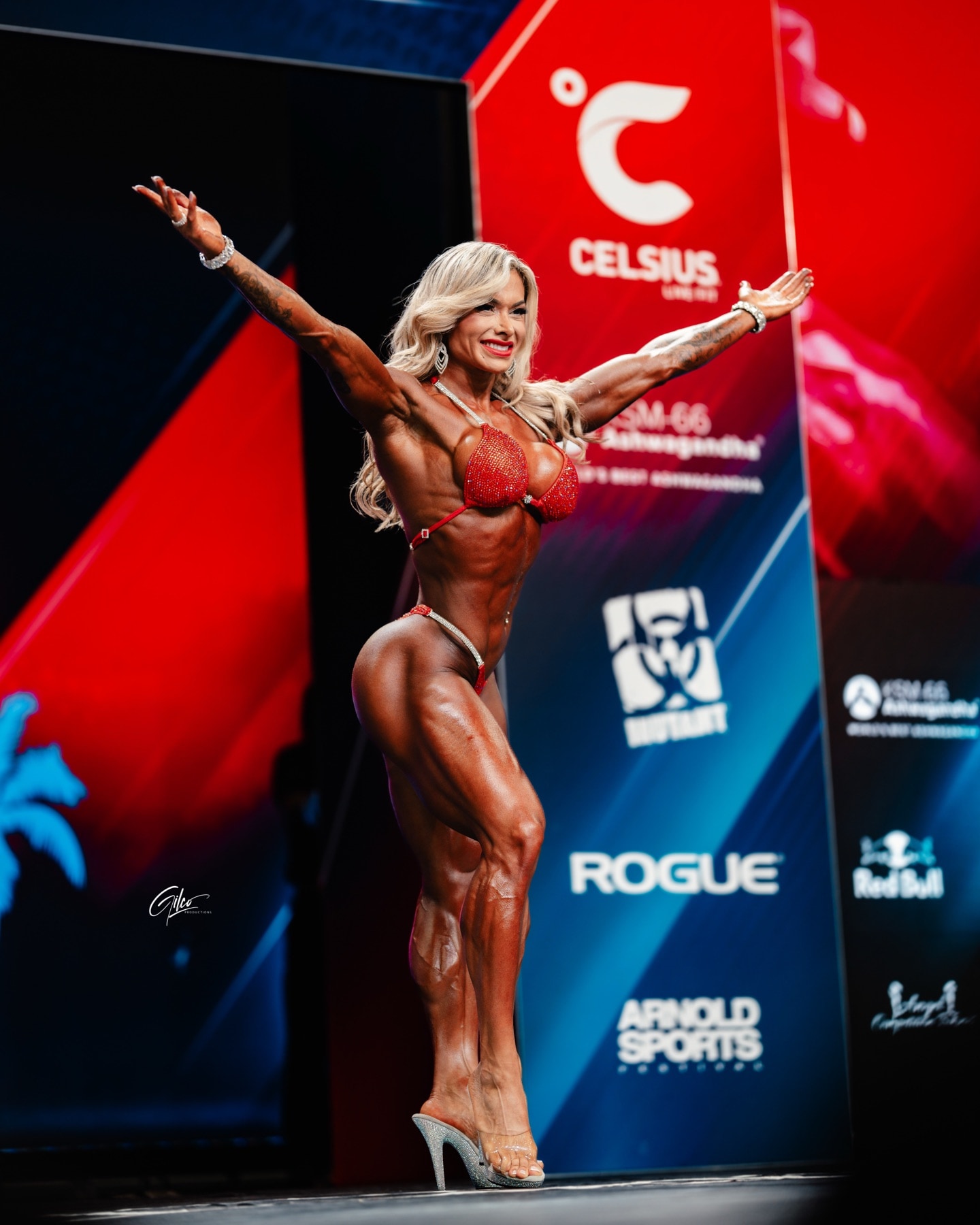
Mandatory poses are the shots the head judge calls for every competitor, so the panel can compare physiques side by side under the same conditions. They are not decoration. They are the exact moments your score is decided. If you understand what each pose is designed to show, you can present your best and hide your weaknesses, rather than hoping the judges look where you want them to.
The specific mandatories change by division, but they fall into two broad families: quarter turns for the physique divisions judged on shape and balance, and muscular mandatories for the bodybuilding divisions judged on size, detail, and control. Here is how to think about each.
Quarter turns: bikini, wellness, and figure
In the physique divisions, the judges ask you to present four positions: front, both sides, and rear, moving a quarter turn at a time. It sounds simple. It is where most first-timers lose points, because the turn itself is rushed and the held position is never clean.
- Front pose: show your overall balance, a small controlled waist, and open shoulders. Weight settles slightly onto one leg to create shape without over-rotating the hips.
- Side pose: this is where lower-body divisions earn their score. Present the glute and hamstring line without over-arching the lower back, and keep the upper body poised.
- Rear pose: the judges read your back detail, glute development, and the taper down to the waist. Keep the line long and do not collapse the chest forward.
- The turn between each is a pose in itself. Move with control, plant your feet, and settle before you hold. A clean transition tells the panel you belong there.
Wellness deserves a special note. The whole point of the division is a pronounced lower body over a tighter upper body, so your quarter turns must present glutes, hamstrings, and quads while the chest and shoulders stay relaxed and framing. Pose wellness like bikini and you leave your best asset off the table.
The muscular mandatories: classic physique and bodybuilding
The bodybuilding-style divisions add a set of flexed mandatory poses. Each one isolates a region so the judges can compare development and conditioning directly. The classic seven are the backbone of any routine.
- Front double biceps: arms up, the whole front of the body on display. The judges scan shoulders, arms, chest, and the taper to the waist all at once.
- Front lat spread: flare the lats to show width, while holding a tight waist. Width without a controlled midsection reads as blocky, not aesthetic.
- Side chest: present a full chest, a tight arm, and a hamstring and calf on the front leg. The line matters as much as the size.
- Side triceps: show the triceps, chest, and again the leg. This is the pose that rewards a genuinely full arm from every angle.
- Rear double biceps: the most information-dense pose in the sport. Back detail, glutes, hamstrings, and calves are all judged at once.
- Rear lat spread: back width and the sweep from lats to waist. A held, controlled spread beats a wide but loose one.
- Abdominals and thighs: hands behind the head, crunch the midsection, and flex the front thigh. Conditioning shows here more than anywhere.
Classic physique finishes with a favourite classic pose of your choice (most muscular is not allowed). The vacuum, a held draw-in of the abdominal wall, is the old-school choice that showcases the small waist the division is named for. It is a genuine point of difference, and it is worth drilling until you can hold it calmly on stage rather than gasping through it.
What the judges are actually scoring
In every mandatory, the panel is comparing three things: the shape or muscle the pose is designed to show, your conditioning in that region, and how controlled and confident the presentation is. You cannot change your conditioning on stage. You can absolutely change how well you present it. That is the entire argument for coaching your posing as seriously as your prep.
The athletes who place are rarely the ones with a single perfect pose. They are the ones whose every mandatory is clean, held, and connected, so the judges never see a weak moment. Learn what each pose is for, drill it until it is repeatable under pressure, and you take control of the one part of the score that is entirely in your hands.